

Trezor Goes Live With SwapKit: Native Swaps Across Bitcoin, Zcash, EVM, Solana, Tron, XRP and More
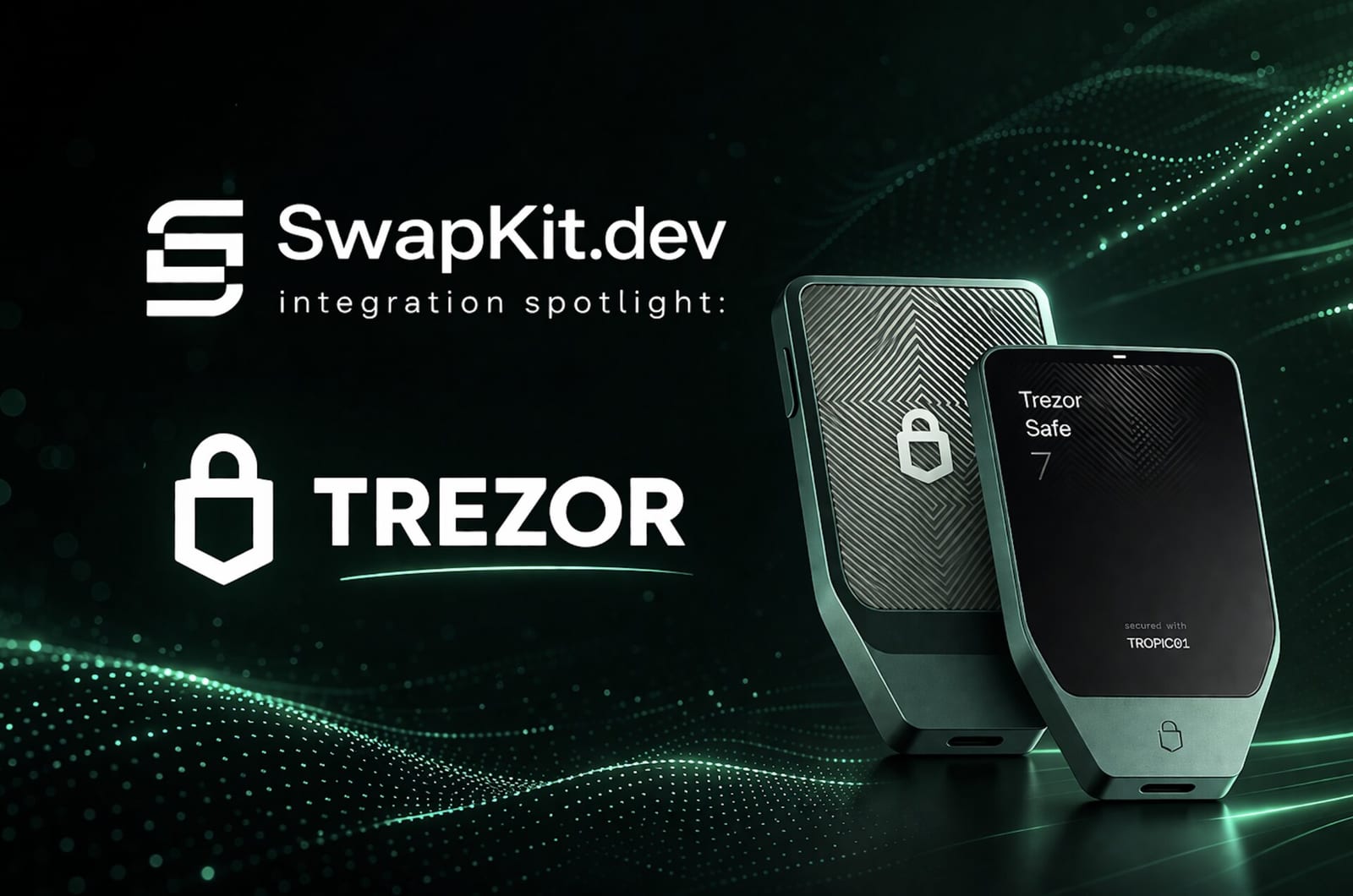
TL;DR: Trezor is now live with SwapKit. Trezor users can swap native assets across Bitcoin, Zcash and other UTXO chains, EVM chains, Solana, Tron, XRP and more, with every swap routed through decentralized, permissionless protocols via SwapKit’s full provider set and confirmed on the device. Your keys never leave the Trezor.
Trezor is live with SwapKit
Trezor built the first hardware wallet. The Trezor Model One shipped on July 29, 2014, and the idea it introduced (keys kept offline, every transaction confirmed on the device) is still how most of the industry thinks about self-custody. Twelve years later, people holding coins on a Trezor want to do more than store them. They want to rebalance, move between BTC, ZEC and stablecoins, or get funds onto a new chain without sending them to an exchange first.
That is what this integration is for. Trezor now uses SwapKit to source quotes and build swap transactions across the chains its users hold. Your keys stay on your Trezor. You pick what to swap, check the details on the device, confirm, and the swap settles natively on the destination chain. No wrapped tokens, no custodial account in the middle, and no company standing between you and the trade. The swaps run on decentralized, permissionless protocols.
Every SwapKit provider, from day one
Trezor is plugged into SwapKit’s full provider set, not a single venue. For each swap, SwapKit asks every provider that supports the pair for a quote and returns the routes side by side, Trezor Suite will return you the best rate.
At launch that includes:
- NEAR Intents: you state what you want to end up with, and a network of solvers competes to fill it.
- THORChain: the longest-running decentralized network for native Bitcoin swaps, using on-chain liquidity pools and vaults.
- Chainflip: a decentralized exchange built for native cross-chain swaps between assets such as BTC, ETH and SOL.
- Maya Protocol: a sister network to THORChain with its own liquidity and chain coverage.
- Harbor: a decentralized exchange for native cross-chain trading, built by the founder of AirSwap and former THORChain engineers, with professional market makers quoting prices. SwapKit was Harbor’s launch partner.
- Flashnet: a Bitcoin-native exchange built on Spark. It uses atomic swaps and an AMM to trade BTC near-instantly, with settlement enforced by Bitcoin’s own rules.
- Pactswap: a cross-chain DEX built on Coinweb that swaps native assets such as BTC, ETH and TRON without bridges. Every trade is backed by collateral, so either both sides settle or the collateral compensates the other party.
- Plus the other providers SwapKit integrates.
You don’t need to know which of these is behind a given swap. The point of aggregating them is that the best available route for your pair shows up without you hunting for it, and when one provider is down or short on liquidity, another can take the trade. As SwapKit adds providers, Trezor gets them without having to build a new integration each time.
Decentralized and permissionless
The venues behind these routes are protocols, not exchanges holding your balance. THORChain, Maya Protocol and Chainflip are run by independent node operators who secure pooled liquidity on-chain. NEAR Intents opens each trade to a network of competing solvers. None of them need you to open an account, and none of them hold your funds as a balance you have to withdraw later.
SwapKit is non-custodial too. It finds the route and builds the transaction, your Trezor signs it, and funds move from your wallet through the protocol to your receiving address. Every step is visible on-chain, and SwapKit’s smart contracts are open source.
Which chains are covered
The launch covers the ecosystems Trezor users hold most:
- EVM chains: Ethereum and the EVM networks SwapKit supports, including their tokens and stablecoins.
- Bitcoin and other UTXO chains, such as Litecoin.
- Zcash, so you can swap ZEC to and from BTC, ETH, stablecoins and the other supported assets straight from your Trezor.
- Solana, including SOL and SPL tokens.
- Tron, which matters if you hold or receive USDT on Tron.
- XRP.
- More to follow as providers add routes.
Every swap settles natively. BTC stays BTC, ZEC stays ZEC, ETH stays ETH, SOL stays SOL, and USDT on Tron is actual USDT on Tron. There’s no bridged or wrapped version sitting in a contract somewhere, which removes a whole category of risk.
Routes can also chain several steps into one transaction, for example BTC into ETH and then into an ERC-20 token, so you sign once instead of three times.
How to swap on Trezor
- Open Trezor Suite and click Swap, from the dashboard or from the account you want to swap from.
- Pick the asset you are sending and the asset and chain you want to receive.
- Compare the quotes and choose a route.
- Review the summary, then confirm the transaction on your Trezor.
- Track progress in Suite until the funds land in your receiving account.
SwapKit handles routing, pricing and transaction building in the background. Trezor handles the part it has always handled: making sure nothing leaves your wallet without your approval on the device.
About Trezor
Trezor launched the first hardware wallet, the Trezor Model One, in 2014. Built by SatoshiLabs in Prague, Trezor devices and the Trezor Suite app keep private keys offline and require every transaction to be confirmed on the device. Trezor’s open-source approach and the standards its team has authored, including BIP39 and the SLIP series, have shaped how much of the industry handles self-custody.
Learn more at trezor.io.
About SwapKit
SwapKit builds non-custodial, permissionless infrastructure for decentralized cross-chain swaps, with open-source smart contracts. Through one API and SDK, wallets, dApps and other platforms get access to native swaps across 30+ blockchains and 10,000+ assets, aggregated from providers including NEAR Intents, THORChain, Chainflip and Maya Protocol. Integrators can set their own swap fees, track transaction status and run address screening.
Building a wallet and want native swaps? Talk to the team or read the docs.
Follow along on X, Discord and LinkedIn.
This article is for informational purposes only and is not financial advice.
Keep reading
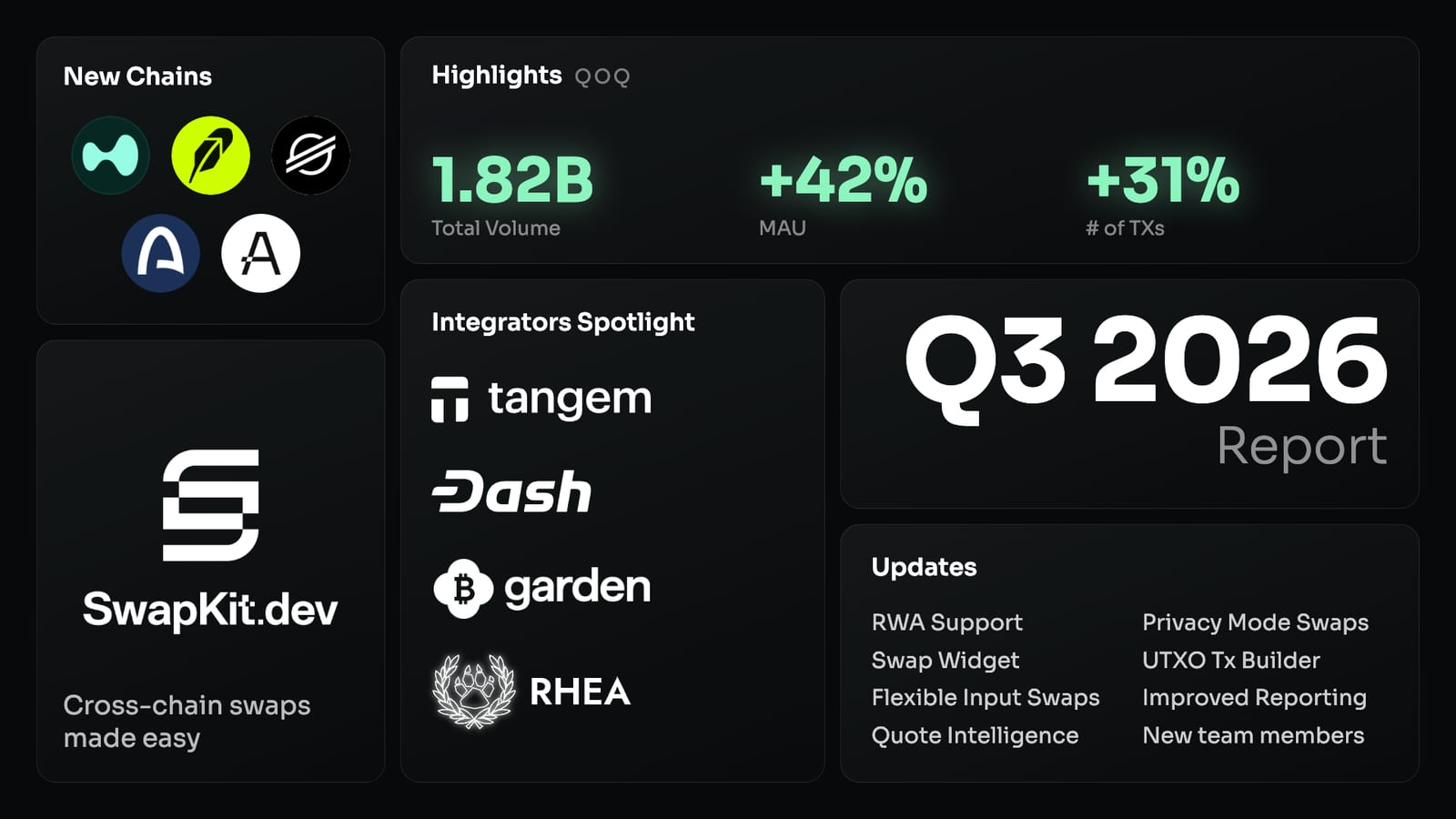
SwapKit Quarterly Report – Q3 2026
SwapKit Q3 2026 report: record $1.82B swap volume, up 36.5% quarter over quarter, driven by RWA swaps on Robinhood Chain and the Tangem integration.
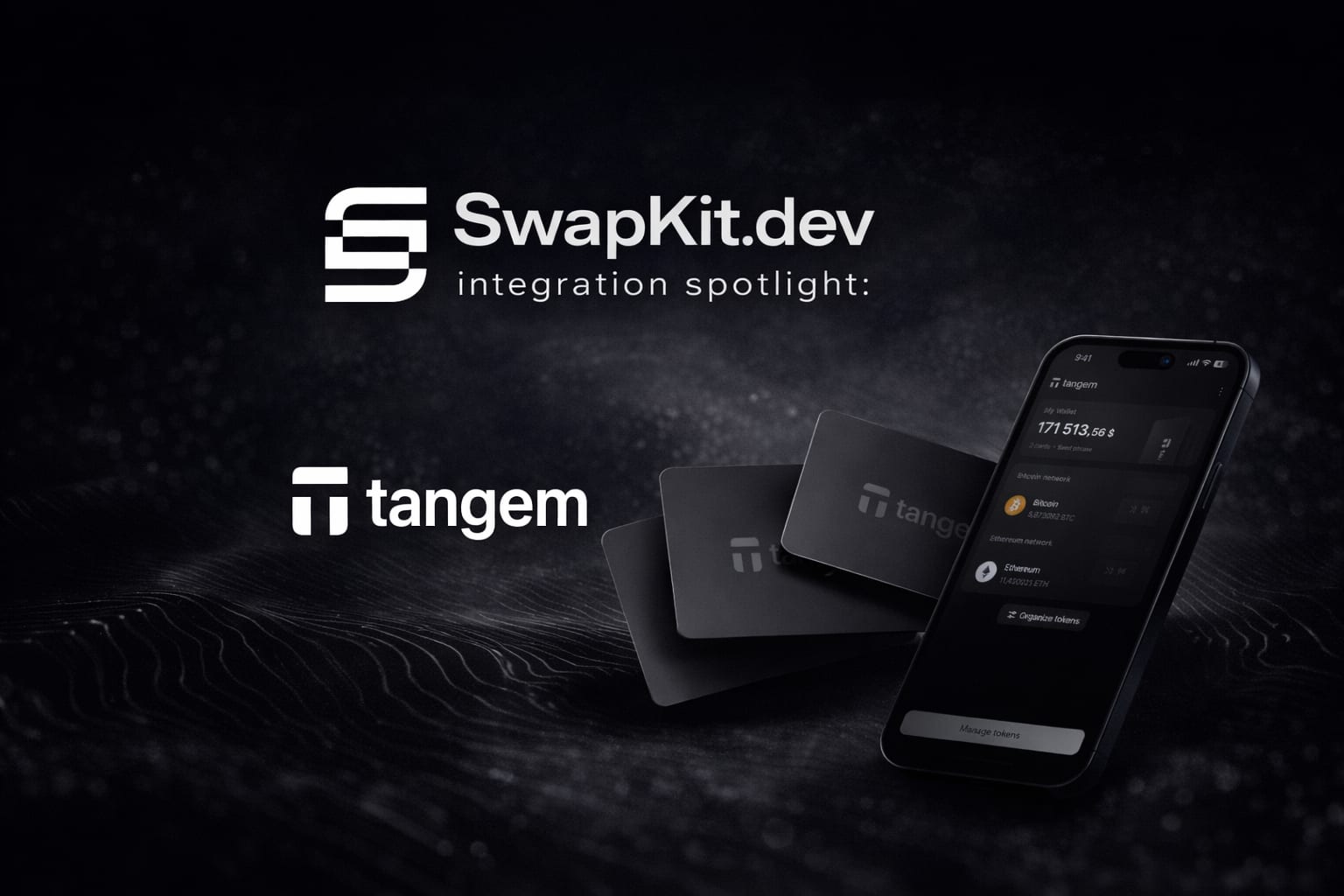
Tangem Taps SwapKit to Unlock Multi-Chain Swaps Across Bitcoin, EVM, Solana, and TRON
Tangem has integrated SwapKit for native, non-custodial cross-chain swaps in its app across Bitcoin, Litecoin, Dogecoin, EVM chains, Solana and TRON.
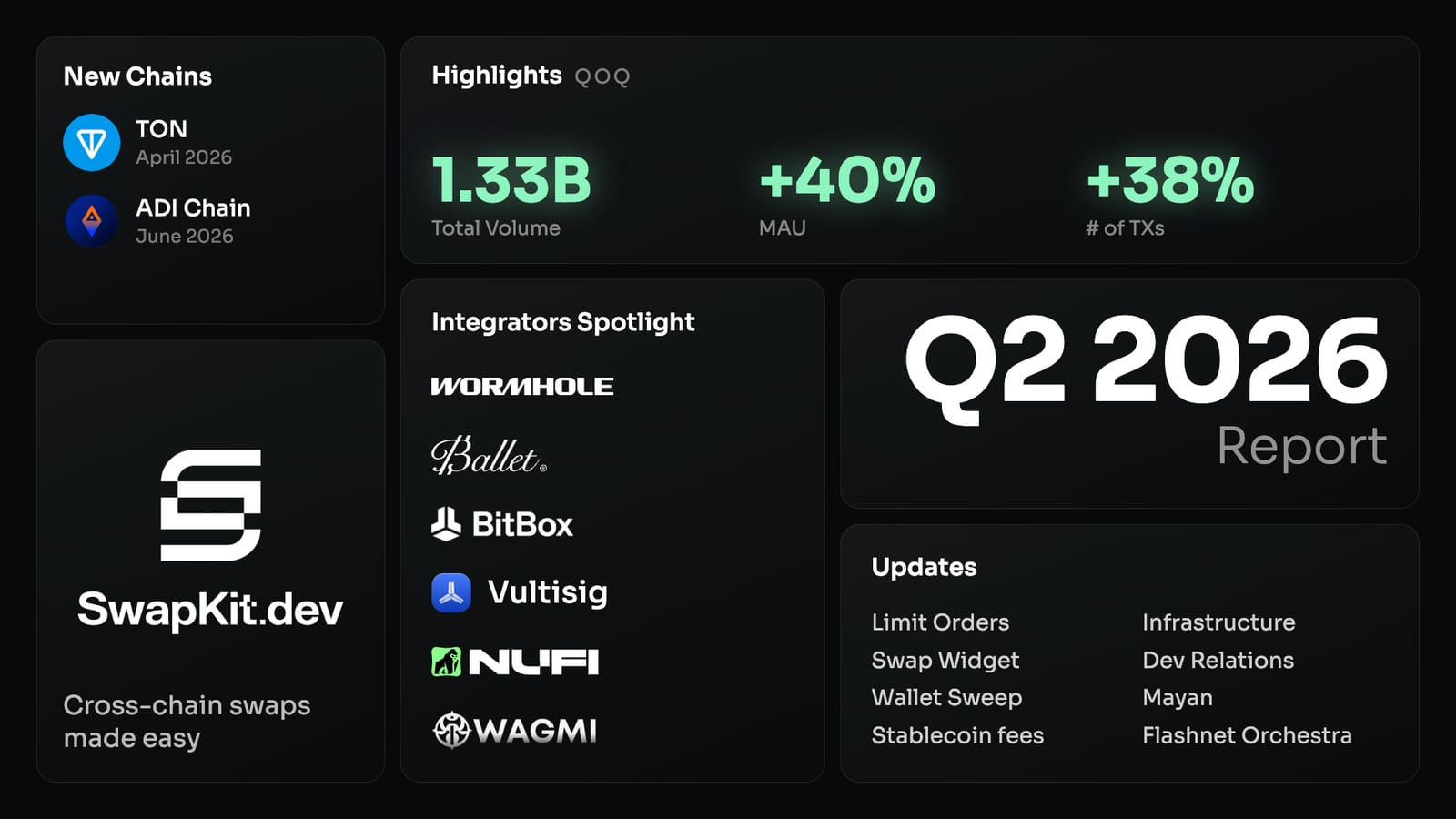
SwapKit Quarterly Report – Q2 2026
SwapKit Q2 2026 report: volume fell only 9.5% as DEX markets dropped 25%, new integrators like Ballet and BitBox, TON and ADI Chain, and the Swap Widget.